
Life is a Picnic
(if only)
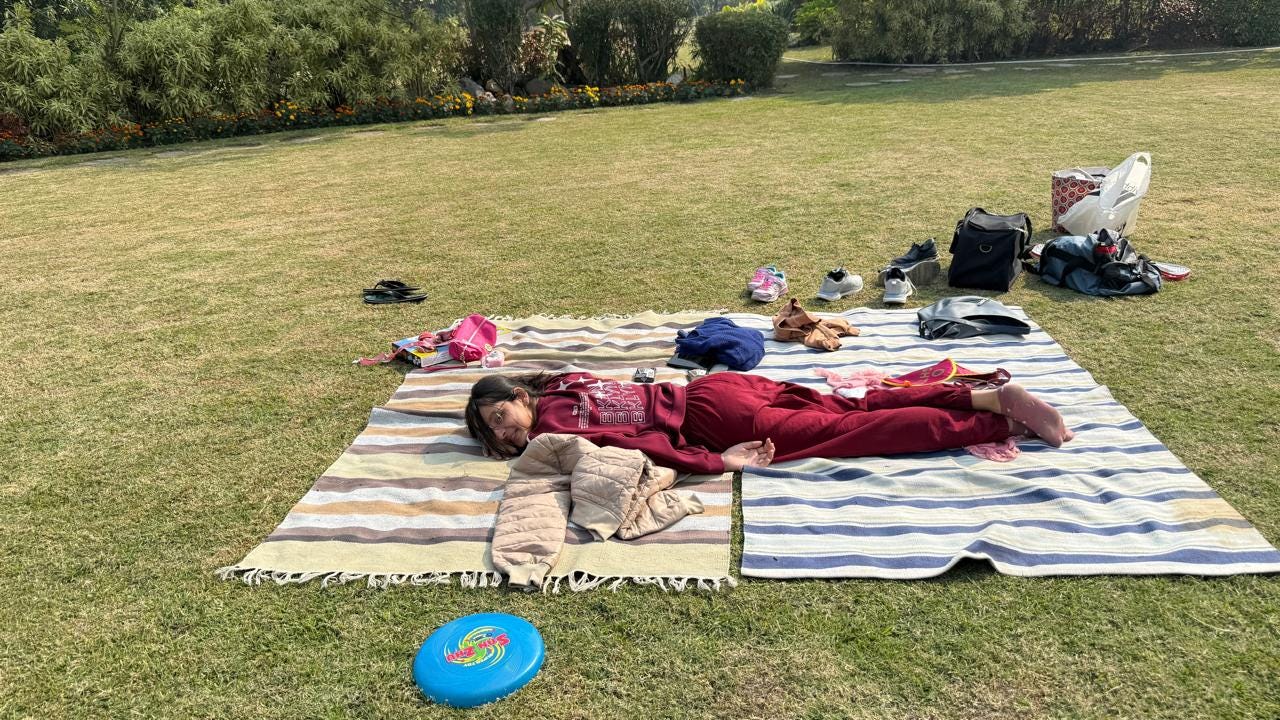
This winter, a few days back, we went to a picnic. A lovely one.
And then, thinking back, there emerged an entire cache of memories attached to picnics.
All set in Kolkata — winter picnics with family and family friends. Winter almost guaranteed a picnic. It didn’t take much effort to organize one, and enthusiasm was never in short supply. With no Netflix, no video games, no WhatsApp or chat rooms, it was the children who demanded them most.
For the elders, a picnic merely relocated what they already did on weekend evenings—playing bridge—into the open, under trees, in the soft winter sun. For us children, it meant cricket, I-Spy, catch-catch, chor-police, or any mischievous variation our imaginations could conjure.
We picnicked at Victoria Memorial, under vast canopies of trees beside placid water bodies. We went to the Botanical Gardens, under what was proudly proclaimed the largest banyan tree in the world. I remember climbing trees there; there is even a photograph of the mums and dads sitting on a thick, elevated branch, improbably at ease. Once we went to Eden Gardens park. Another time, to Nicco Park—long before it became an amusement park—when it was little more than a small zoo of rodents, snakes, birds, rabbits, and assorted creatures that could be found, captured, and caged.
Those were unfettered, loose-limbed times. What remains now are echoes: tinny screams, the thud of fast balls against unsuspecting backsides, endless running. We all knew one another, and the elder children were invariably cruel to the younger ones. They sent them to field where the ball landed most, hurled balls designed not to be caught, and delighted in the shrieks that followed. They made them retrieve rubber rings from dubious goo. I suspect there exists a universal fraternity of elder brothers who treat younger siblings with casual brutality—and find joy in it.
Perhaps that is where the earliest lessons in power and offhand cruelty are learned.
I still remember the names. Lalit —my elder brother. Shelley, Nikhil, Pratibha—siblings now lost to time. Iroo and Ina, as close now as then, though life has scattered us across cities. Dolly, the bubbly cousin. And sometimes, Usha and Kamal, cousins, still around, still close, different people now.
But it is the elders who have mostly passed on: Aunty and Uncle Mehta, RC Uncle and his wife, Masi, Masaji, Tauji. Each one a universe unto themselves, complete with quirks and contradictions. Even now, I find myself assigning them adjectives—sagacious, harebrained, bubbly, infectiously enthusiastic, painful, knowledgeable. All flawed. All beautiful. All, in some way, mine.
They return to me through stories. The aunty learning to drive who pressed the accelerator instead of the brake and drove straight into a factory wall. The uncle who sold insurance and investments and was legendary for his persistence—so hard to disengage from that, when he visited our office with his battered briefcase, we would duck under our desks and wait him out, leaving him genuinely puzzled at the empty hall. Another uncle read Time magazine cover to cover—except, as he said disdainfully, the last few pages, which carried film, book and art reviews, and the famous Time essay. I remember looking down sheepishly; those were the very pages I read first, and sometimes the only ones. And then there was the aunty at whose house I often played, where tea came with exactly two biscuits—until outside guests arrived, at which point three varieties of snacks would appear without fail.
At moments like these, my mother’s voice returns to me. When something unfair or unkind happens to you, she would say, remember that the universe has given you this experience so that you do not do the same to anyone else.
What I remember most vividly about those picnics is not any single incident, but the setting itself: large shaded trees, a coverlet spread on the ground, an abundance of snacks and drinks, elders in good humour, and children chasing a stray cricket ball in the gentle winter sun. These were days we called “breaks”, but they were really affirmations—of how life feels when one is unburdened, present, and briefly free.
There is something quietly radical about letting the world be. About allowing life’s tensions to loosen on their own. About giving oneself over to moments that don’t add up to anything measurable, yet come to matter more than most things that do.
It is said that life is not a picnic. Perhaps that saying exists not as a warning, but as a reminder—of what picnics truly represent: connection, ease, beauty. Often, life needs very little else to be of worth.


I write, so you can enjoy and expand your world. Would you like to support me? Well, here’s what you can do -
share this post -
tell me of your thoughts -
subscribe, if you love it -
Delightfully relatable, as always...:):)